


 0
0

The Future of Marine Fuel: Understanding HVO and Biofuel for Marine Engines
- by Five Power Products
- May 06, 2026
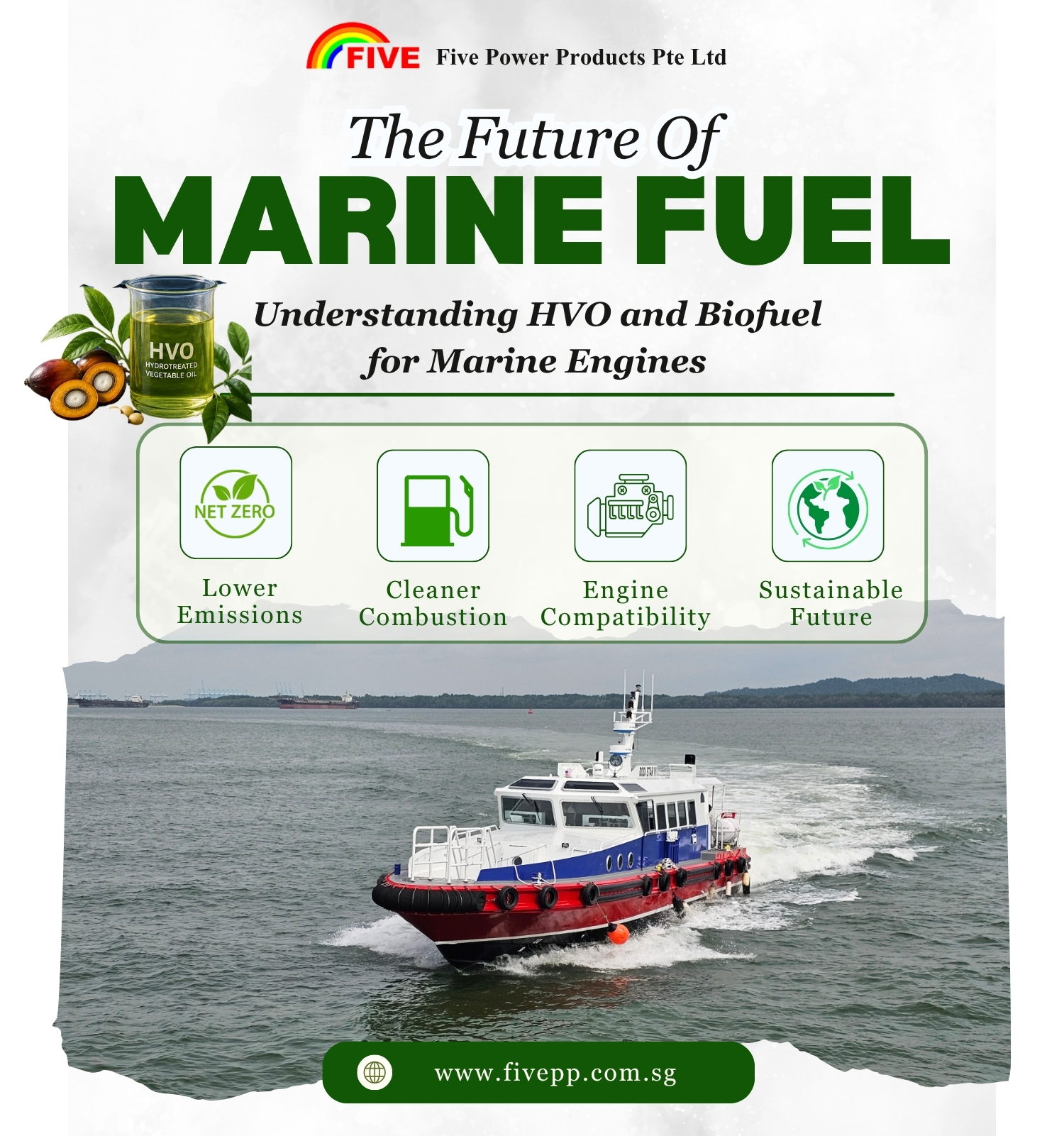
As the global marine industry moves toward sustainability and lower emissions, alternative fuels are becoming an
increasingly important topic among boat owners, operators, and engine manufacturers. Among the emerging solutions,
Biofuel and HVO (Hydrotreated Vegetable Oil) are gaining attention as cleaner alternatives to traditional diesel fuel.
But what exactly are these fuels, and how could they impact the future of marine operations?
The Growing Need for Cleaner Marine Fuels
For decades, marine vessels have relied heavily on conventional diesel fuel due to its reliability and energy efficiency.
However, environmental concerns and stricter emission regulations are driving the industry to explore more sustainable
fuel solutions.
Governments, ports, and environmental organisations around the world are encouraging the reduction of carbon emissions in
the transportation and marine sectors. As a result, cleaner fuel technologies are becoming more relevant for both
commercial and recreational boat operators.
What Is Biofuel?
Biofuel is a renewable fuel produced from biological sources such as vegetable oils, animal fats, and waste organic
materials. Unlike fossil diesel, biofuel can help reduce overall greenhouse gas emissions because it is derived from
renewable resources.
One common type of marine biofuel is Biodiesel, which is often blended with conventional diesel fuel in different ratios,
such as:
-B5 (5% biodiesel)
-B20 (20% biodiesel)
-B100 (100% biodiesel)
Biofuels are increasingly being explored in marine applications due to their potential environmental benefits and
compatibility with certain diesel engines.
Understanding HVO Fuel
HVO, or Hydrotreated Vegetable Oil, is considered one of the more advanced renewable diesel fuels available today.
Unlike traditional biodiesel, HVO is produced through a hydrogen treatment process that creates a cleaner and more stable
fuel. The result is a renewable diesel that closely resembles conventional fossil diesel in chemical structure and
performance.
Some key advantages of HVO fuel include:
Lower carbon emissions
Cleaner combustion
Reduced smoke and particulate emissions
Improved fuel stability
Compatibility with many modern diesel engines
Because of these benefits, HVO is becoming increasingly attractive for marine operators looking to reduce environmental
impact without making major modifications to their vessels.
Can Marine Engines Use HVO and Biofuel?
Compatibility depends on the engine manufacturer, engine model, and fuel specifications.
Many modern diesel engines may support certain blends of biofuel or renewable diesel fuels such as HVO, while some engines
may require specific approvals or adjustments. Boat owners should always consult the engine manufacturer or authorised
distributor before switching to alternative fuels.
As the marine industry evolves, more engine manufacturers are actively researching and developing solutions that support
cleaner fuel technologies.
Benefits for the Marine Industry
The adoption of HVO and biofuel could offer several long-term benefits for the marine sector:
1. Reduced Environmental Impact
Cleaner fuels can help reduce greenhouse gas emissions and support global sustainability goals.
2. Future Regulatory Readiness
As environmental regulations become stricter, operators using cleaner fuels may be better prepared for future compliance
requirements.
3. Improved Corporate Sustainability
Companies adopting environmentally friendly technologies can strengthen their brand image and demonstrate commitment to
sustainable operations.
4. Transitional Solution
For operators not yet ready to move fully electric, HVO and biofuel may serve as practical transitional solutions while
maintaining existing diesel-powered systems.
Challenges to Consider
Despite the advantages, several challenges still exist:
-Fuel availability may vary by region
-Costs can be higher than conventional diesel
-Engine compatibility must be carefully verified
-Long-term marine performance data is still developing in some applications
These factors highlight the importance of proper evaluation before transitioning to alternative fuels.
Looking Ahead
The future of marine fuel is likely to involve a combination of technologies, including cleaner diesel alternatives,
hybrid systems, and fully electric propulsion.
While traditional diesel engines will continue to play an important role for many years, the growing interest in HVO
and biofuel reflects the marine industry’s shift towards more sustainable and environmentally responsible operations.
More info on our website: https://www.fivepp.com.sg/blogs/
Check our social media page: https://www.facebook.com/fiveab/
Recently View Article








message us
Need more information or assistance?
We are here to help.